ESTADOS UNIDOS

-
ARGENTINA

-
BRASIL

-
MÉXICO

-
CHILE

-
COLOMBIA

-
PERÚ

-


Latest posts

10 de September de 2025
Share:



Florencia
AV & Collaboration Specialist
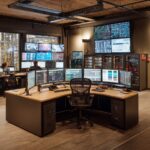
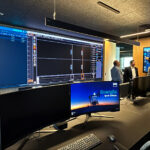
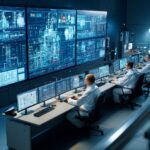
These are the essential factors and key recommendations for designing monitoring spaces in the Oil & Gas and mining industries. The implementation of control rooms in refineries represents a major challenge: it demands precision and safety. These spaces are essential for supervising and coordinating critical aspects of the operation, such as: Ensuring safety in the handling of hazardous materials Ensuring that key processes can be managed quickly and accurately Therefore, designing a control room involves considering factors that optimize operator well-being and guarantee operational continuity, even under high pressure. And it is essential to follow these seven key principles. The design must prioritize the operator’s well-being and efficiency, considering that the room will operate 24/7. In refineries, shifts are usually long and under constant pressure. Ergonomics is key to reducing fatigue and errors. This is achieved with adjustable workstations, ergonomic chairs, and strategic monitor layout. Lighting and noise control are also crucial. The room must provide complete clarity for critical decision-making and a quiet environment to avoid distractions. “Operators must see what matters, when it matters, without distractions or delays,” highlighted Newtech Group. “Safety is a consequence of all the above,” they added. In a control room, decisions must be made quickly, which requires clear and precise information. Therefore, real-time data visualization is essential. Centralized panels with key performance indicators (KPIs) enable instant reactions. These should integrate data from various sources and display it intuitively for immediate analysis. This type of visualization improves coordination with other teams—such as engineers or managers—and ensures that decisions are based on the greatest amount of available information. A failure in the control system can halt the entire refinery operation, with serious economic and safety consequences. Redundancy is essential. Having duplicate components ensures that in the event of a failure, a backup system immediately takes over. “Redundancy provides time and control to act calmly,” explained Newtech Group. Modern control rooms must integrate multiple systems such as: Distributed Control (DCS) Automation Safety systems Centralizing functions in a unified platform improves response to unforeseen events and provides flexibility—essential in such dynamic environments as refineries. Modern control rooms must integrate multiple systems such as distributed control (DCS), automation, and safety systems. As highlighted in our guide on technological integration in Oil & Gas, centralizing functions in a unified platform improves response to unforeseen events and provides flexibility—essential in environments as dynamic as refineries. Wiring and communications require careful management. An organized installation ensures the quality and speed of connections. Additionally, a proper HVAC system (heating, ventilation, and air conditioning) is crucial to maintain a controlled environment and prevent hardware failures. Connectivity is vital for safety and operational continuity. Infrastructures must be implemented to protect against unauthorized access or interference. Both wired and wireless networks must meet high security standards. A modular and adaptable architecture allows greater flexibility to meet refinery demands. Starting up a control room requires a comprehensive training plan. Training should be practical and oriented toward real system use, enabling operators to act autonomously. Teams must be prepared to respond quickly and efficiently without relying exclusively on external support in critical moments. In Oil & Gas and mining projects, the most common mistake is designing control rooms focused only on technology, without considering actual operational use. This can result in complex or impractical spaces. “Not involving end users from the beginning is the most frequent mistake,” noted Newtech. To avoid this, it is crucial to identify the needs of operators and supervisors and validate the design through simulations before implementation. The effectiveness of a control room depends on all elements working in coordination, allowing quick and accurate responses to any incident. At Newtech Group, we offer customized solutions for the design and implementation of control rooms. Our team of experts can help you create a space that maximizes productivity and ensures the continuity of your critical processes. Contact us today and discover how we support the industry in this technological challenge.
1) Operator-Centered Ergonomics
2) Real-Time Data Visualization
3) System Redundancy for High Availability
4) Advanced Technological Integration
5) Efficient Cable Management and Controlled Environment
6) Secure Connectivity
7) Training Plan and Autonomy
Key Takeaway
Ready to Optimize Your Refinery’s Efficiency and Safety?
Share

If you are looking for advice on technological solutions
in videoconferences please write us!
"*" indicates required fields
© 2026 All rights reserved | newtechgroup.com