ESTADOS UNIDOS

-
ARGENTINA

-
BRASIL

-
MÉXICO

-
CHILE

-
COLOMBIA

-
PERÚ

-


Latest posts
16 de December de 2025
Share:



Florencia
AV & Collaboration Specialist
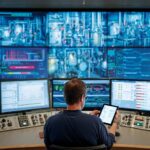
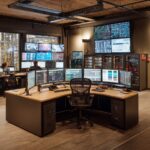
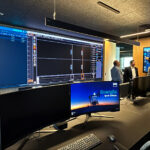
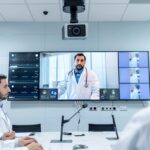
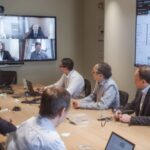
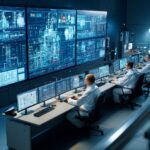
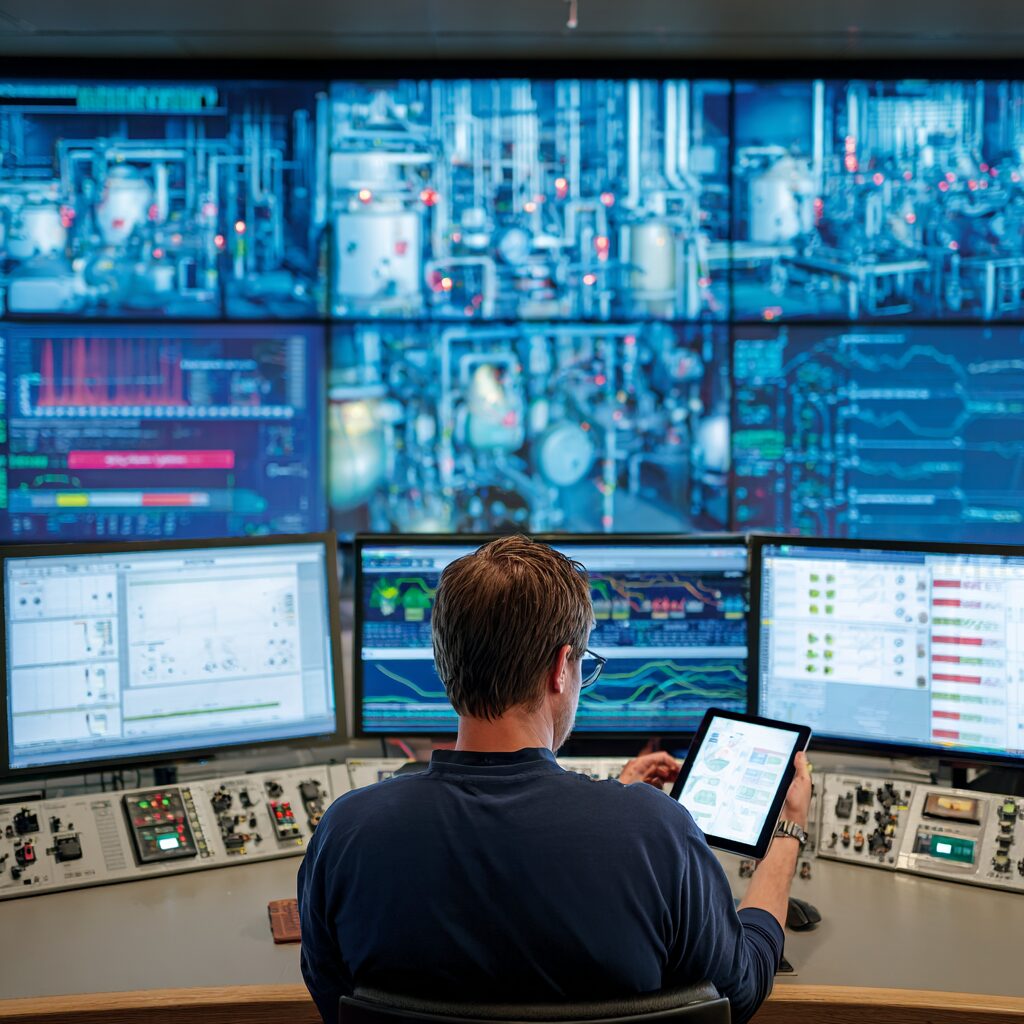
The year-end close is more than an operational review. It’s the ideal time to take a deep look at how the infrastructure that supports your day-to-day operation is performing. This guide helps you identify opportunities, anticipate risks, and set the stage for a safer, more efficient, and more organized 2026. In the Oil & Gas sector, pressure doesn’t come only from operations. New regulatory challenges, extreme environments, more demanding operating standards, and the need to make decisions faster require much finer control over infrastructure. And we’re not talking only about equipment or cables. We mean the complete system that keeps the operation standing: from how control rooms are configured to how prepared personnel are to use the installed technology. Year-end is the best time to put all of this under the microscope, and start the next cycle with clarity and focus. And if daily coordination or incident response relies on Microsoft Teams, the voice layer also has to be included in that checklist (for example, with Teams Direct Routing). Racks, UPS systems, cabling, network nodes, industrial displays… are they in shape to keep operating without failures throughout 2026? Do you have guaranteed technical support or spare parts availability if something goes down? Field experience shows that many installations are maintained just enough, trusting that “it’s been holding up.” But in spaces where everything depends on continuous and precise operation, that’s not a good strategy. At Newtech Group we work with equipment designed specifically for industrial environments—resistant to dust, heat, vibrations, and with built-in redundancy. Reviewing this point today can help you avoid unplanned (and very costly) downtime tomorrow. There are tasks that shouldn’t be in human hands anymore. Not because people can’t do them, but because it doesn’t make sense for them to. Generating reports, handing off information between shifts, validating operating parameters, or managing access: if all of that depends on manual processes, it becomes a risk rather than a routine. Many companies in the sector have already taken the step toward agile automation without custom development, using solutions that make it possible to integrate alarms, data, and validations in real time. The impact is immediate: fewer errors, less time lost, less rework. The key is to find the critical points, solve them with concrete technology, and support the team so the solution doesn’t stay on a desk—it gets used every day. It’s not about how many screens the room has, but whether that room truly helps you operate better. At Newtech Group we design collaboration spaces (control rooms, crisis rooms, or training rooms) starting from a simple question: what does the team that will work there need to do? Many times, what slows down operations isn’t a lack of technology, but the way it’s distributed, configured, or integrated. A good room organizes information, prioritizes alerts, enables quick action, and helps decisions get made clearly. And it does so without technology getting in the way. The other big question is whether that room is designed to scale. Because what seems sufficient today may be too small tomorrow. Designing with modularity, expansion possibilities, and operational redundancy isn’t an “extra”—it’s part of the core of any critical room. A technology implementation doesn’t end when the last cable is connected. It ends when the team uses it, understands it, and incorporates it into their day-to-day. If that doesn’t happen, it’s like having a control room with the lights off. That’s why in every project we support teams from the start, with an Adoption and Change Management approach, hands-on training, clear documentation, and spaces to adjust based on how work is actually done. Because when technology responds to what happens in the field, it becomes part of the team. And when the implementation includes productivity and collaboration tools, a Microsoft 365 adoption plan helps accelerate real day-to-day usage. Doing this checklist makes sense if it helps you make decisions. That’s why the close of this review should be a concrete roadmap: what to maintain, what to upgrade, what to automate, and in what stages to do it. At Newtech Group we help organize that path. Not with generic solutions, but with technical diagnostics, modular proposals, and plans that adapt to the real pace of each operation. Because we know transforming critical infrastructure doesn’t happen overnight—but we also know the cost of not doing it. Do you want your infrastructure to be more robust, efficient, and aligned with your operation in 2026? At Newtech Group we work with companies in the energy sector to audit, improve, and scale their technology infrastructure. Request a meeting with our team and let’s start planning a new operational year together.Is your infrastructure performing as it should?
How to reduce the burden on what demands the most
Technology rooms: is the operational heart well designed?
Training isn’t just teaching: it’s making sure it gets used
What now? Design your 2026 roadmap
Share

If you are looking for advice on technological solutions
in videoconferences please write us!
"*" indicates required fields
© 2026 All rights reserved | newtechgroup.com