ESTADOS UNIDOS

-
ARGENTINA

-
BRASIL

-
MÉXICO

-
CHILE

-
COLOMBIA

-
PERÚ

-


Latest posts
1 de December de 2025
Share:



Florencia
AV & Collaboration Specialist
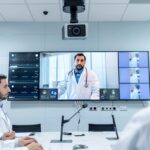
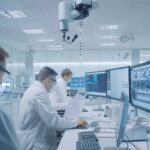
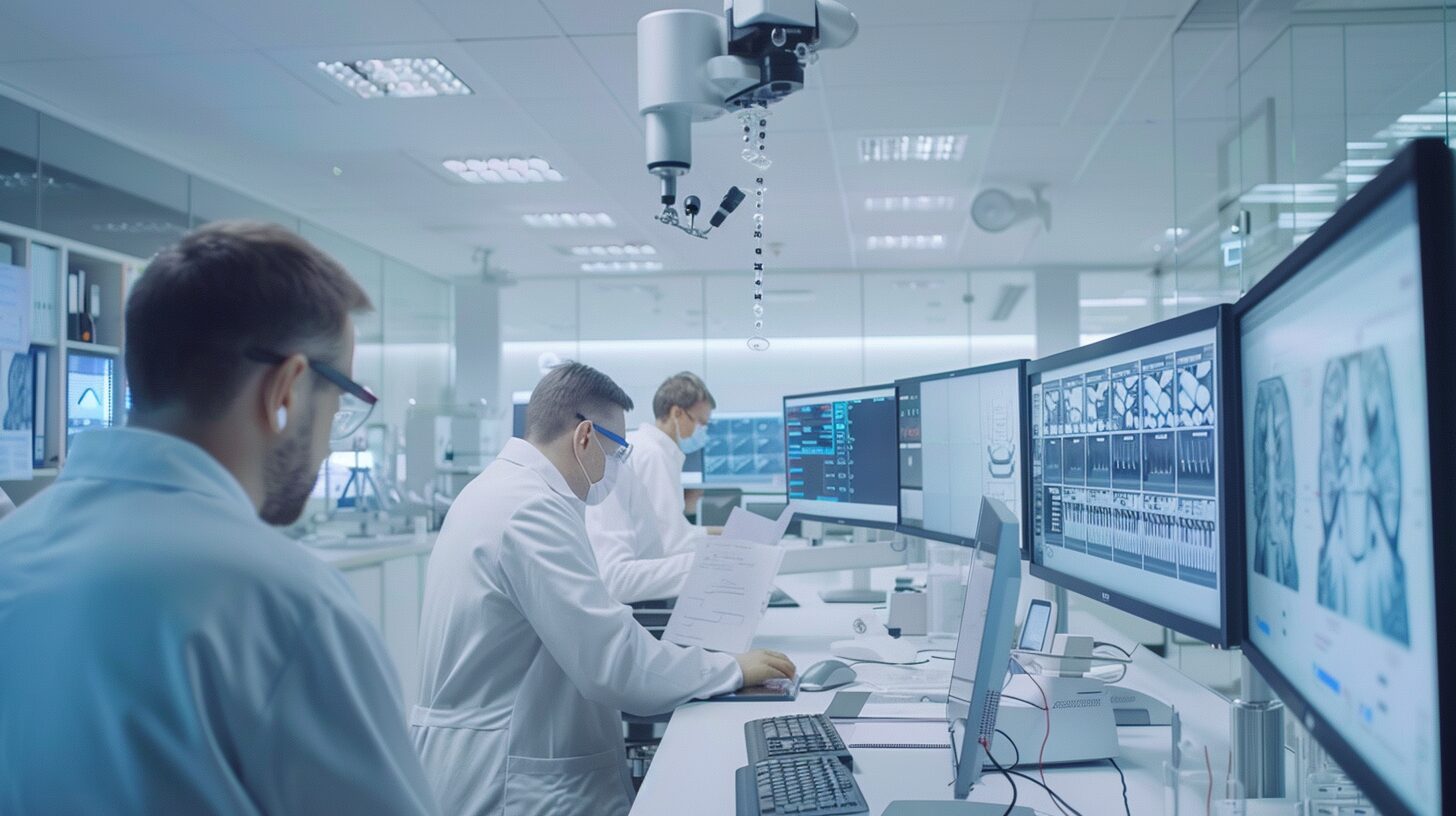
Digital transformation in clinical and research laboratories helps teams work in sync and respond faster. In clinical laboratories and medical research centers, the flow of information is constant and critical. Test results, diagnostic images, patient records, and even team communications must circulate accurately and within very short timeframes. At the same time, remote collaboration and telemedicine will continue to grow as healthcare systems seek to optimize resources and improve quality of care. This scenario raises a key challenge: how can we ensure that all necessary information is available in real time for physicians, biochemists, lab technicians, and specialists? The answer lies in equipping laboratories with the right technology to create environments capable of integrating audio, video, and data into a single interoperable platform. According to Avalon’s Fifth Annual Laboratory Trends Report, the clinical diagnostics testing market is expanding rapidly, driven by the increasing complexity of analyses. This growth reinforces the need for specialized environments such as connected laboratories, which can integrate audio, video, and data in real time. The report estimates this ecosystem at around USD 137 billion, with projected annual growth close to 9%. This outlook highlights the urgency of modernizing these spaces. Clinical and research labs handle large volumes of sensitive information. This is not limited to numeric results, but also includes: Images Procedure videos Equipment logs Documentation linked to every stage of the process Ensuring proper availability and traceability is essential so that clinical decisions are always based on accurate data. Remote collaboration is also becoming increasingly common. For example, a specialist in another city or country can join a procedure, provide real-time input, and make evidence-based decisions without travel delays that could slow diagnoses and impact patient outcomes. Integrating audio and video ensures communication is clear, secure, and synchronized with lab data, enabling a far more efficient workflow. Technology integration directly improves operations and patient care quality. Key benefits include: Real-time supervision of clinical processes Audiovisual capture and full traceability Tele-assistance and multidisciplinary collaboration Advanced training and onboarding In a connected laboratory, technology is not an end in itself, but an enabler of safe and efficient procedures. Newtech Group integrates solutions based on real laboratory workflows, data security regulations, and existing infrastructure. Key solutions include: Specialized AV design: high-definition cameras strategically placed to capture procedures or teleconsultations, noise-canceling microphones for clinical discussions, and monitors that display results and video calls simultaneously. Secure data management and connectivity: integration of lab equipment, sensors, workstations, and EHR/EMR systems with cloud or on-premises platforms to ensure controlled consistency and availability of information. Real-time remote collaboration: using platforms such as Microsoft Teams Rooms, specialists can participate in diagnostic reviews or interpret results regardless of location. Centralized visualization: dashboards that integrate medical images, lab results, video, and logs into a single interface to support traceable analysis and reporting. Implementing a connected laboratory requires a structured approach that considers workflows and staff adoption. Beyond installing equipment, it involves redesigning processes and establishing protocols to ensure safe and effective use. At Newtech Group, we guide connected lab development through five stages: Initial assessment: mapping processes, data flows, and critical points to identify where integrating audio, video, and data will have the greatest impact. Connected environment design: selecting AV equipment, sensors, collaboration platforms, and visualization tools aligned with current infrastructure and clinical needs. Integration and go-live: installing, configuring, cabling, and synchronizing audio, video, and data, with full testing to ensure operational continuity. Training and adoption: educating clinical and technical staff so they understand the workflow and use the technology efficiently and securely. Monitoring: supervising performance, introducing improvements, and scaling based on new needs, while staying aligned with regulations and quality objectives. If you are evaluating a modernization project or designing a new connected laboratory, we can help you build an interoperable environment prepared for the next challenges in healthcare. Contact our specialists to learn more about your project.Why connected laboratories matter in healthcare
How connected labs enable collaboration
Benefits of a connected laboratory
Complex analyses or critical procedures can be monitored without requiring all specialists on site. For instance, during genetic testing validation or cell culture evaluations, a remote expert can confirm findings and issue recommendations immediately.
Each procedure is recorded and documented, making internal audits and certifications easier. This traceability allows teams to reconstruct any step in the workflow if an error or review occurs.
Specialists from different disciplines can participate, comment, and decide on a clinical case from anywhere, ensuring timely and well-grounded responses.
Recorded audiovisual material supports training for new team members with real, contextual cases. This improves protocol adoption and significantly reduces errors.Newtech Group solutions for connected laboratories
Transforming laboratory operations
Share

If you are looking for advice on technological solutions
in videoconferences please write us!
"*" indicates required fields
© 2026 All rights reserved | newtechgroup.com