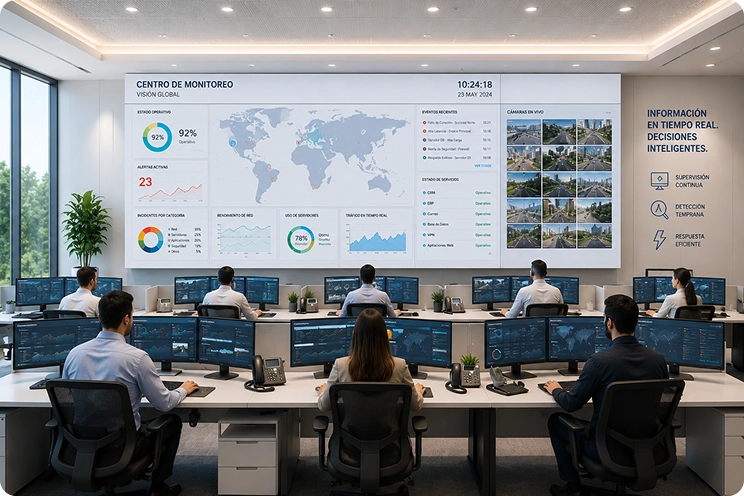
Turnkey design and integration of corporate EOCs, from the initial site survey to go-live.
When an incident hits, the time between detection and action determines the impact. A crisis command center puts your leaders, data, and communications in one room, so decisions are made with clarity and control from the first minute.
Centralized situational awareness
Mission-critical AV infrastructure
REQUEST A TECHNICAL ASSESSMENT
See the solution >
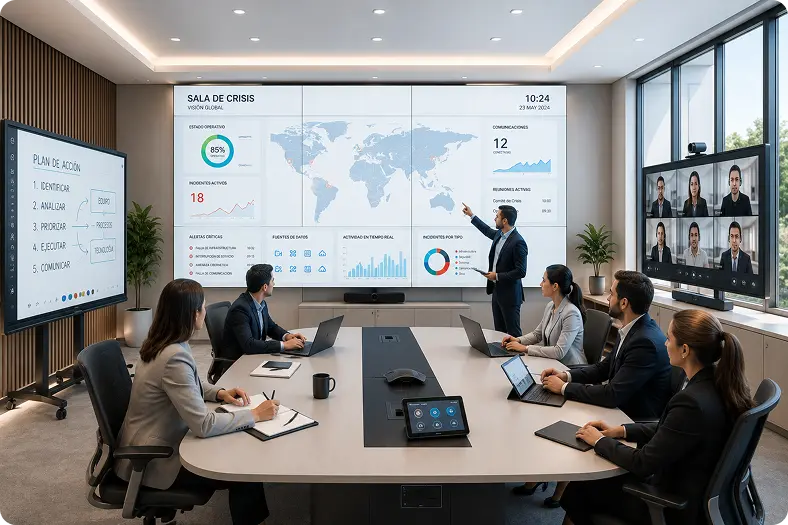
We design and install turnkey emergency operations centers for organizations that can't afford to improvise when an incident hits. From the initial site survey through commissioning, we handle every stage, so you never have to coordinate multiple vendors.
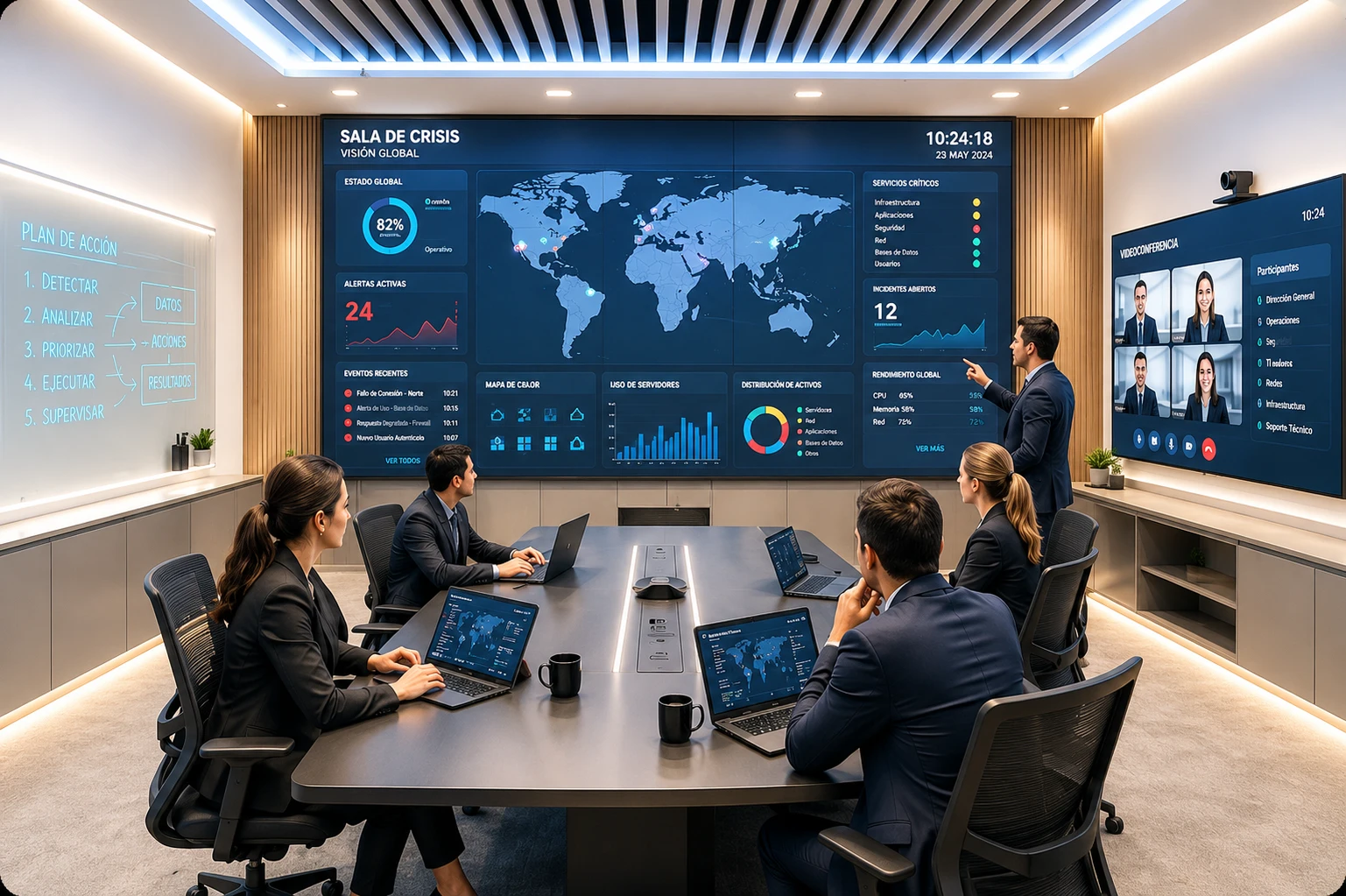
Turnkey implementation
Site survey, space design, certified equipment procurement, and full commissioning. A single point of contact for the entire project, with no friction between phases.
Integration with your operational systems
We connect the room to the systems you already use — SCADA, monitoring platforms, alerting systems, and corporate networks — so every source feeds a single common operating picture during an incident.
Certified equipment from leading brands
As an authorized partner of Poly HP, Crestron, Shure, LG, Cisco, and other leading manufacturers, we select technology with the performance, scalability, and official support each project requires.
Local technical support with regional coverage
Our certified technicians in Argentina and across Latin America help reduce the risk of downtime, perform preventive maintenance, and deliver priority response when it matters most.
An EOC is activated when an incident requires bringing together leaders from different departments, centralizing critical information, and coordinating decisions in real time. Here are some common scenarios by type of operation.
To coordinate the response to events that can affect production or plant safety.
Common scenarios: unplanned downtime, critical failures, accidents, and maintenance contingencies.
To manage incidents that put critical assets, networks, or distributed facilities at risk.
Common scenarios: service outages, infrastructure failures, field incidents, and operational emergencies.
To respond to disruptions affecting routes, distribution centers, or service continuity.
Common scenarios: supply chain disruptions, warehouse incidents, operational deviations, and critical delays.
To centralize decision-making when an incident impacts stores, warehouses, or customer service locations.
Common scenarios: system outages, security incidents, operational disruptions, and cross-site coordination.
To coordinate the response to events affecting facilities, essential services, or people's safety.
Common scenarios: power outages, building system failures, evacuations, and infrastructure contingencies.
To validate information, escalate alerts, and activate response playbooks in critical situations, often alongside a global security operations center (GSOC).
Common scenarios: intrusions, threats, on-site incidents, and coordination with internal or external teams.
An EOC doesn't just transform a room — it transforms how your organization operates when it matters most.
Faster response to any incident
Bringing information, people, and tools together in one space helps cut activation and coordination times when every minute carries operational and financial impact.
Stronger business continuity under pressure
Predefined response playbooks, redundant systems, and centralized communications help keep operations running and strengthen your ability to respond to complex incidents.
Executive decisions backed by complete, real-time information
The right decision-makers get critical information at the right moment, with greater visibility, fewer bottlenecks, and better conditions for making the call.
Seamless coordination across every team involved
IT, security, operations, and communications work from one integrated ecosystem, with fewer silos, fewer delays, and a clearer flow of information during an incident.
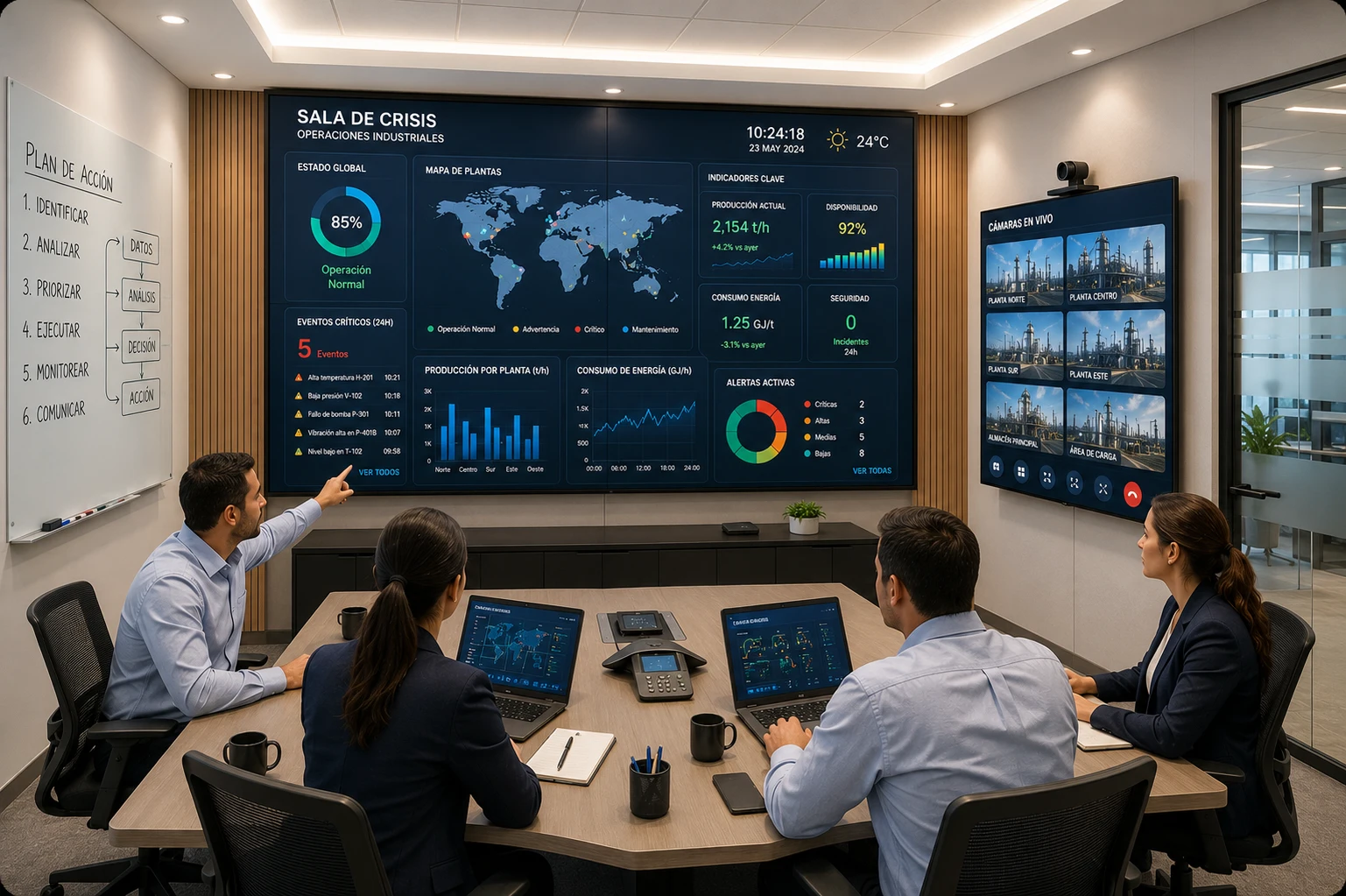
We assess your current infrastructure, the systems you need to integrate, and the critical processes behind your operation.
Every emergency operations center is equipped with technology from certified manufacturers, selected to meet the project's technical requirements and backed by official brand support.
























Every project goes through five stages, from assessing your operational needs to ongoing post-handover support. The result is a right-sized room, integrated with your systems and ready to activate whenever it's needed.
REQUEST A TECHNICAL ASSESSMENT


We design scalable spaces for organizations that need to integrate platforms, standardize environments, and operate with greater reliability.
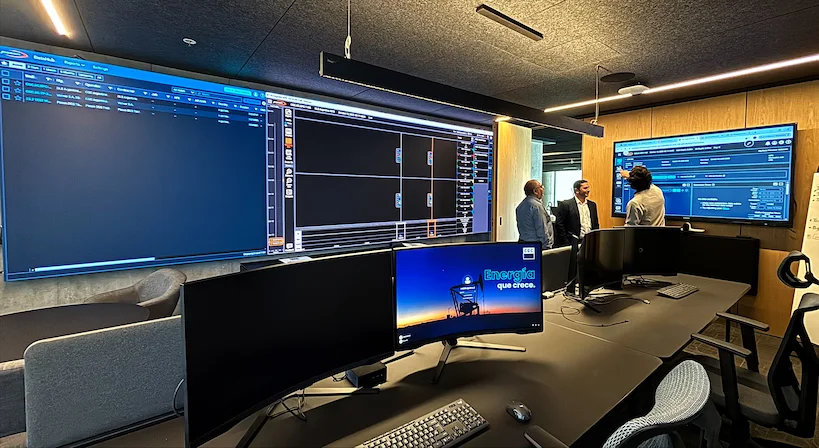
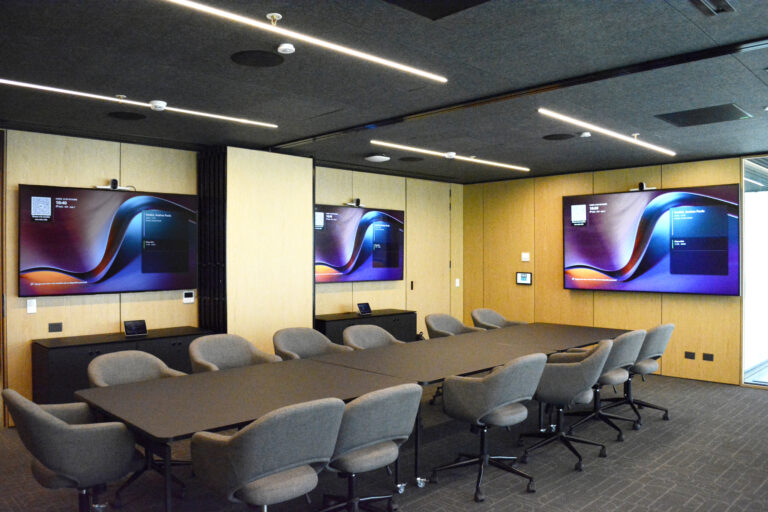
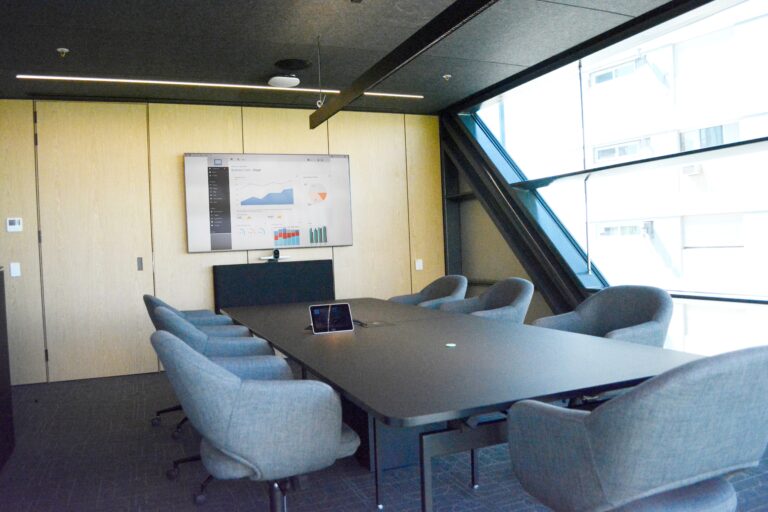
By modernizing more than 90 spaces, we enabled technical teams and executives to connect in real time without friction: the experience is simple, consistent, and reliable. Integrating platforms, high-end audio and video, and centralized control allowed us to standardize rooms and speed up decision-making when operations demand it.
Joaquin Arito - IT Manager

What types of incidents or contingencies do you need to manage? A regional specialist will assess your infrastructure and outline the next steps.
"*" indicates required fields
Tell us which critical situations you need to manage and which systems need to be integrated. A regional specialist will help you define the right scope.
Explore other solutions to monitor operations, centralize critical information, and respond in real time.
A monitoring center oversees operations continuously. An emergency operations center is activated for specific incidents to bring decision-makers together, centralize information, and coordinate decisions. Some organizations deploy both as complementary spaces.
Yes. During the site survey, we evaluate whether displays, audio systems, network infrastructure, or other components can be incorporated into the project. This helps optimize your investment and prioritize only the upgrades you actually need.
It depends on how critical your operations are and how often you expect to use it. In some cases, a dedicated space is recommended; in others, a multipurpose room can be designed to switch into EOC mode quickly when needed.
There's no standard size. It depends on the number of participants, the displays required, the systems that need to be visualized, and the expected workflow during an incident.
The timeline depends on scope, equipment availability, and integration complexity. After the initial technical site survey, we build a schedule tailored to your project.
For an initial assessment, all we need is the available space, the estimated number of users, and the main critical scenarios. Floor plans, photos, or an inventory of current equipment can speed up the site survey, but they aren't required.
Request a TECHNICAL ASSESSMENT
X"*" indicates required fields