
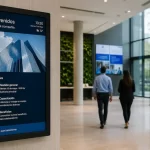

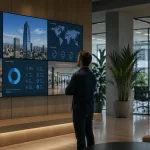

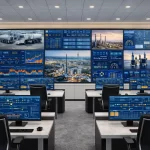
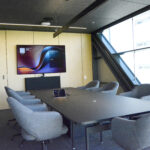

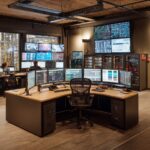
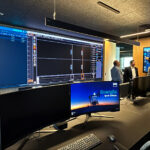

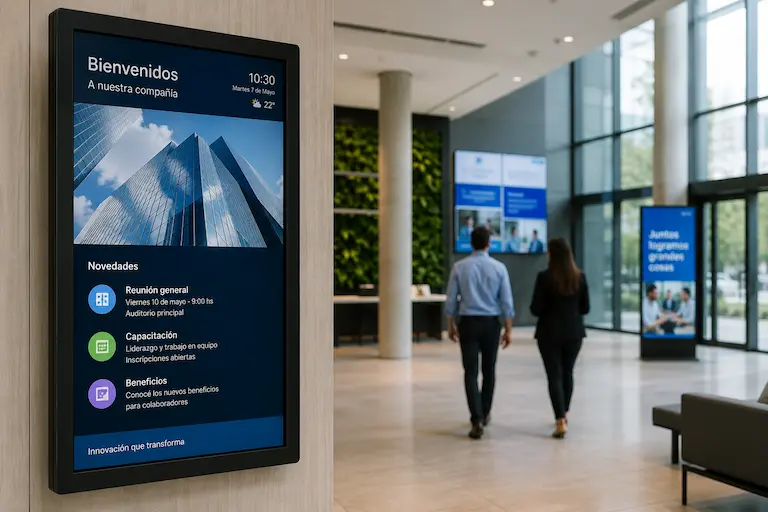



One of the first questions that arises when a company considers modernizing its visual communication is how much a digital signage system costs. The direct answer is: it depends. But that answer is not evasive—digital signage projects have a very wide price range because the variables that define the cost are many, and they all have a significant impact. In this article, we explain exactly which factors determine the cost of implementing digital signage in an organization, so you can evaluate your options with clear criteria before requesting a proposal. Not all displays are created equal. There is a considerable difference between a consumer TV and a professional display designed to operate 24/7. Professional displays feature higher brightness (measured in nits), better thermal management, extended warranties, and are the only ones recommended for corporate or critical environments. Size, resolution (Full HD, 4K), installation environment (indoor, outdoor, high-brightness), and the number of units are the first variables that define the budget. A project with a single display in a reception area is completely incomparable in price to a deployment of 50 screens across multiple branches or a video wall for a control room. The software is what allows you to manage what is shown on each screen, when, and from where. The pricing variables for this component include: Open-source solutions have zero licensing costs but require your own infrastructure, internal technical support, and customization—which in many cases ends up being more expensive than an enterprise solution when operational costs are factored in. Each display requires a media player to process and render the content. There are different options: dedicated external players, built-in systems (System on Chip), or devices running Android/PC. This choice affects both the upfront cost and long-term operational stability. In critical environments (24/7 operations, control rooms), robust hardware is recommended, which comes with a higher cost but greater reliability. Added to this is the connectivity infrastructure: structured cabling, switches, industrial-grade Wi-Fi, or connection to the corporate network depending on the environment. The work of a certified integrator includes site surveys, architecture design, physical installation of displays and hardware, software setup, testing, and team training. The complexity of the installation varies depending on the number of locations, building conditions, mounting height, whether civil work is required, or if the hardware needs to integrate with other systems (ERPs, sensors, external APIs). A digital signage project does not end with installation. Post-installation support is a key component of the total price, especially for critical operations. Support contracts can include: Projects in critical environments (hospitality, airports, Oil & Gas) require more demanding SLA levels that directly impact service costs. It is a common mistake to compare only the licensing cost. A proper evaluation considers the total cost of ownership (TCO) over 2–3 years: Organizations with robust IT teams and infrastructure budgets can benefit from open source. Those that prioritize operational continuity, short deployment times, and certified support generally end up choosing enterprise solutions. The most efficient path is to speak with a specialized integrator before defining a budget, not after. With details about your operation (number of screens, locations, environment criticality, required integrations), the solution can be properly sized to present options across different investment ranges. A reputable provider will ask questions before giving you a number. If the first contact consists of a price without a diagnosis, that is a red flag. At Newtech Group, we work with companies across various industries and sizes to design digital signage systems tailored to each organization's operations and goals. Want to know what your project needs? Request your proposal today.The Factors with the Most Impact on Price
1. Type and Quantity of Displays
2. Content Management System (CMS) Software
3. Additional Hardware: Media Players and Connectivity
4. Installation and Deployment
5. Support and Service Level Agreement (SLA)
Open Source vs. Enterprise Solution: The Real Difference in Costs
Dimension
Open Source
Enterprise
License
No cost
Monthly/annual cost per device
Infrastructure
In-house servers (CAPEX)
Cloud included or lower cost
Deployment
High technical complexity
Standardized process with support
Support
Community / internal team
Certified SLA
Scalability
Requires development
Native
Operational Risk
High in critical environments
Low
How to Move Forward Without a Defined Budget?